Bright Shadow's Campfire Conversation
Reflecting on our discussion exploring creativity and dementia
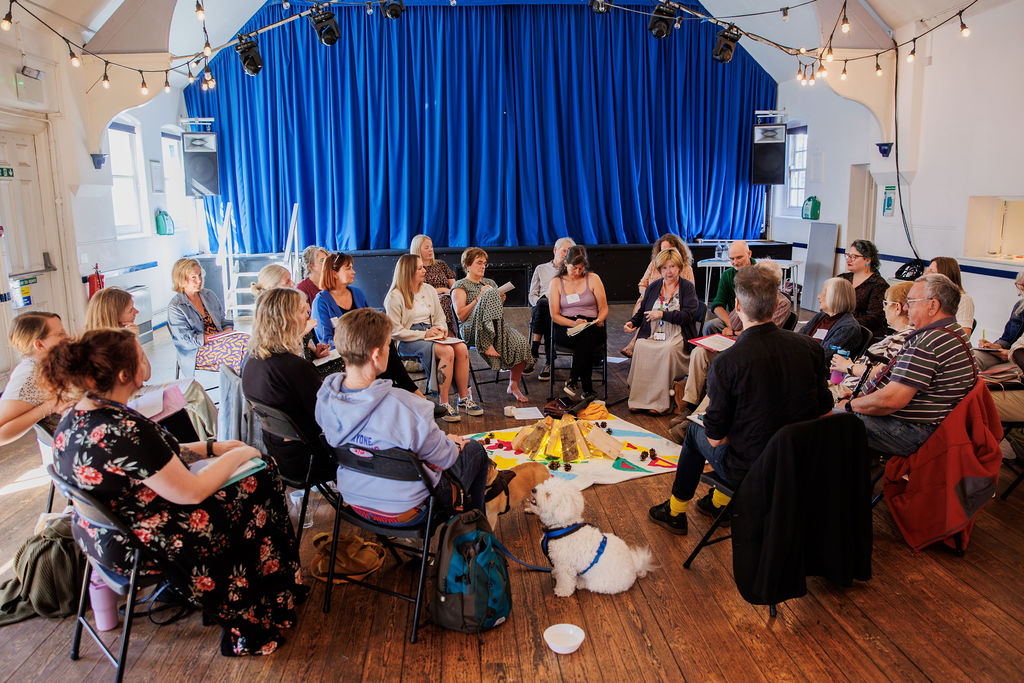 image credit: Image credit: Jen Holland
In this article, we invite readers to gather round the fire with us and reflect on our first Campfire Conversation, exploring its threads together so we can work together to weave a better landscape for people living with and affected by dementia. This article follows on from two previous articles, in which we explored the relationship between our methodology and the latest arts and health research, and shared the findings of our Open Forum events. These articles serve to open up our learning and practice, articulating what makes our approach different, and how we can widen our impact by sharing our principles beyond our own creative programme.
Campfire Conversation
Our first Campfire Conversation focussed on the key themes that emerged from our Open Forums:
- The desire for connection: culture as community
- The importance of creativity and the value of the multi-art form approach
- Artistic interventions as a model for supporting relationships by transforming day-to-day interactions
Bright Shadow, people living with and affected by dementia, our Cultural Bridge partner organisation Raum der Kunste and members of the artistic, health and social care community came together to explore how creativity helps people living with and affected by dementia stay connected, valued and included. Together we explored the experiences and cultural needs of people with dementia.
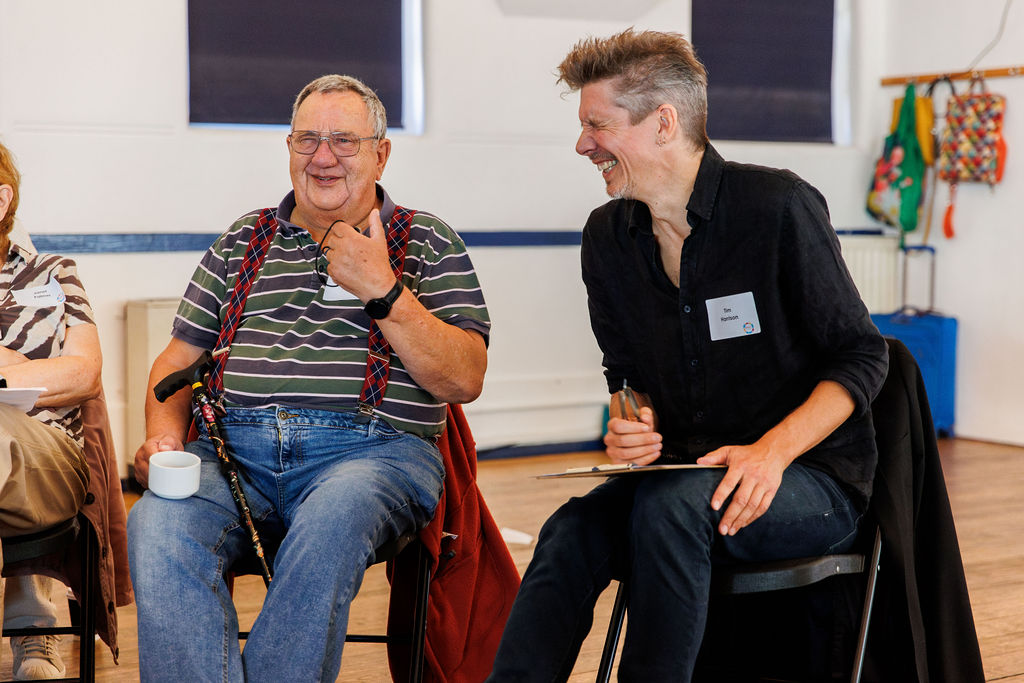
With the lights dimmed, we sat in an intimate circle around our own campfire lit with twinkling fairy lights. Tim Harrison, Artistic Director of We Live Here, Co-founder & Creative Director of Manchester’s SICK! Festival and Programme Lead for Medway Council’s Creative Health Place Partnership Programme, hosted our conversation. He opened the space by inviting us to think about how we can harness the power of pioneering creative practices to expand their impact to wider society. Our conversation first gathered around post-diagnostic hope and the importance of finding community.
Finding community: post-diagnostic hope
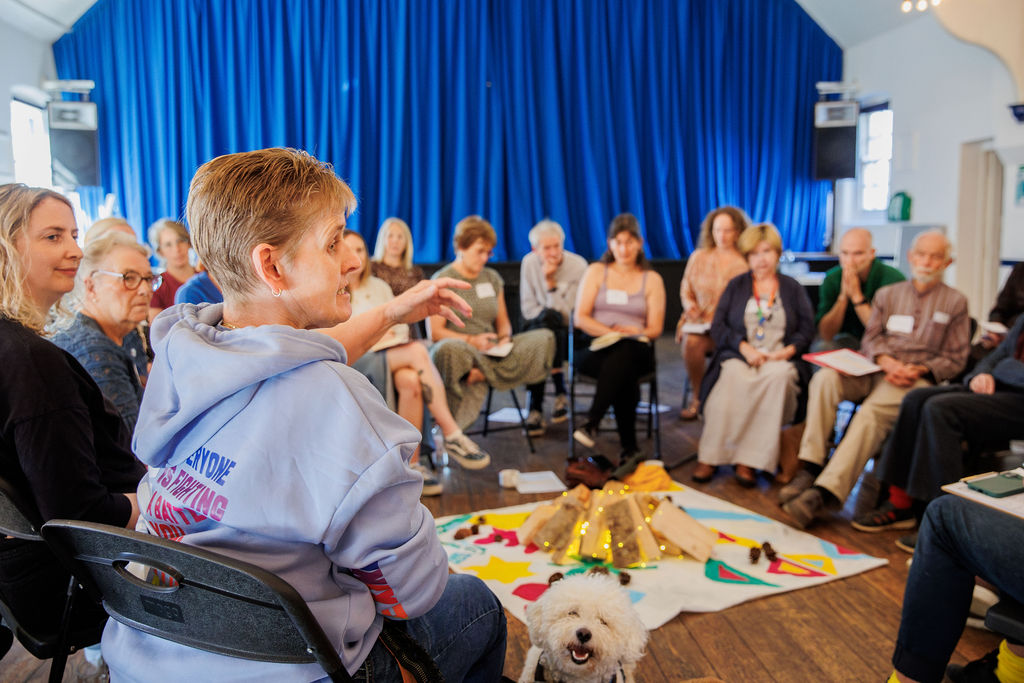
“A dementia diagnosis is life-changing, but it shouldn’t be life-ending.”
Gill Ashington, Zest participant and Bright Shadow trustee
Citizen Artist Gill Ashington opened the conversation by speaking about the impact of her diagnosis of frontotemporal dementia at 48 years old, over video call during lockdown. Having been rejected from another creative dementia group for being too young, she found Bright Shadow, which offered her a community of talented artists, dedicated staff and people living with dementia, people who “genuinely embrace you and want to know how you’re doing and accept you for you.”
Our participants have often shared the sense of despair a diagnosis of dementia can bring, and how engaging in the kind of ambitious, high quality, multi-artform programmes that Bright Shadow has pioneered acts as an antidote to this: offering a sense of hope, purpose and community following diagnosis. Following Gill’s lead, those around our campfire who are living with dementia continued to explore the roots of post-diagnostic hope and how hope might be offered to more people receiving a dementia diagnosis.
“Bright Shadow saved my life. It made me realise I could say yes to things.”
Dawn Horne, Picture This participant and Bright Shadow trustee
By building a creative community which embraces everybody regardless of challenges, Bright Shadow helps people like Dawn feel empowered to challenge themselves and try things they might never have tried without a dementia diagnosis. This in turn influences how others perceive us, with Dawn going on to share how people sometimes comment that she doesn’t seem like she has dementia.
Challenging preconceptions about what dementia is, is important for people living with and affected by dementia. One member of the group shared that the notion of memory problems being the most significant aspect of living with dementia can act as a hindrance, as the self doubt, loss of confidence and anxiety that can often be profoundly challenging are overlooked.
By engaging in acts of creativity that challenge us, we can ensure we are not underestimated, by ourselves or others. Our artists also recognise the importance of their work in opening the door to possibilities: “Zest is great at building resilience”, observed Bright Shadow artist Jen Holland. With that said, the group spoke of difficulties finding the community that we know is so central to living well with dementia. This stems from being able to navigate the landscape of what’s on offer, as well as experiences at the point of diagnosis which emphasise the existence of no cure. While there are few medical interventions available, we know the impact of ambitious creative programmes for people living with dementia, and the group shared a desire for this to be considered a treatment in its own right.
Working with artists: Quality, ambition, passion
Brian, who lives with dementia, continued this exploration of the impact of working with professional creative practitioners on people living with and affected by dementia. “The strength is in the artists they bring forward,” he shared. “They have the ability to put that talent into anything,” Brian continued, “and when they’re working with people living with dementia, that passion is brought out” in participants too. Gill added:
“I think that by using professional artists, that adds value, and that value is reflected back. If you put people with all that experience, that quality, that value, that professionalism in with somebody with dementia, that reflects back and then we feel valued. It reflects right back. It goes way, way beyond getting together and making things or doing music or any of those things. It’s way, way more.”
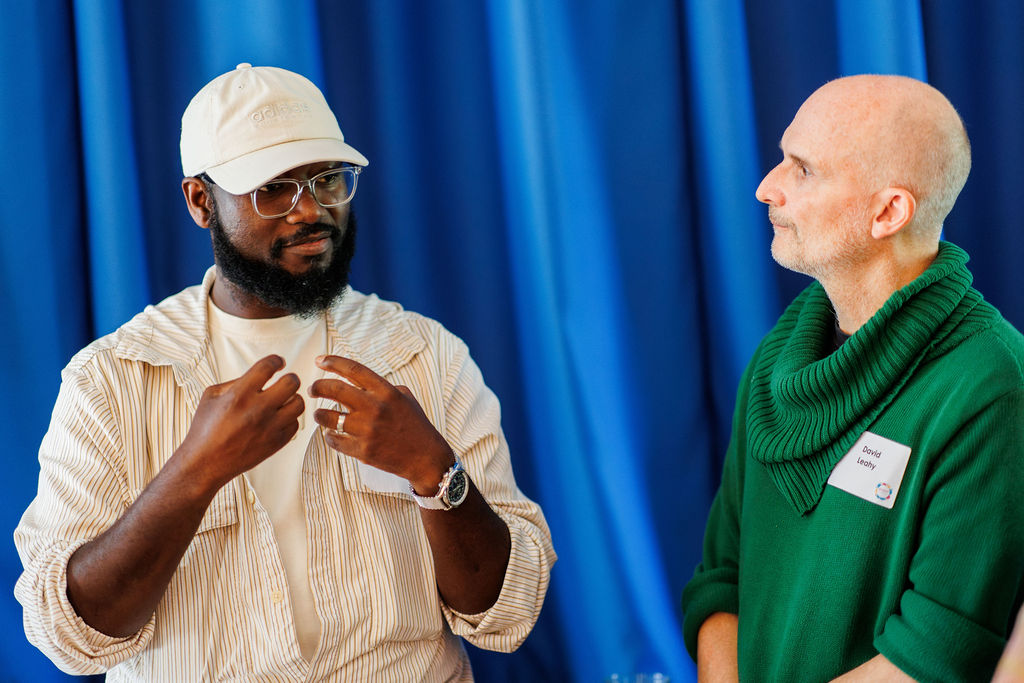
As Gill went on to describe, the essence of this value that professional artists bring can be difficult to articulate, as so much of it dwells beyond articulation in language – part of what makes this work so vital to the wellbeing of people living with and affected by dementia. Indeed, Bright Shadow artist David Leahy shared that this essence lies in using his experience as a professional artist to “create space to make a connection.” Through artistic expertise – and adeptness in lateral thinking, as family supporter Janet added – people with dementia are invited to take risks, growing into that space of connection through creativity – and going beyond connection into ambition.
Here the question arose again of how to connect the most marginalised members of our community with our vital, creative, dementia positive community. At Bright Shadow, after many conversations like this including with Gill and NHS Dementia Envoy Keith Oliver, we have developed a pioneering NHS-backed, Age UK Innovation Fund supported citizen journalism project, Bright Times, to try to break through some of these barriers. Led by people living with dementia, this monthly publication will be distributed initially across East Kent including at points where people may receive a diagnosis, serving the dual purpose of inviting people into our dementia-positive community and showing the wider community what people living with dementia are capable of.
Cross-sector collaboration and funding
We were fortunate at our Campfire Conversation to be joined by representatives of a wealth of creative organisations, including Raum der Künste, People United, Canterbury Festival and The Dementia Experience CIC, all of whom believe as we do in the value of working with professional artists to raise marginalised members of our community up through ambitious creative projects. With that said, a recurring theme of our conversation was the scarcity of funding for vital work like this. Indeed, as Gill described, the difficulty of articulating the essence of the value that collaborating with professional artists brings can contribute to a challenging funding landscape for organisations like those who joined us.
Two Bright Shadow artists who joined our conversation and who are also part of our Cultural Bridge project, spoke about the importance of the creative freedom we invest in our artists in a funding landscape whose insecurity can lead to the shutting down of opportunities for creative invention. As David Leahy explained, “working with Bright Shadow gives me a chance to re-evaluate my own virtuosity and practice.” Lucy Stockton-Smith agreed, adding “Bright Shadow allows me to take risks as an artist, a very rare opportunity in the current landscape.” As we explored earlier in the conversation, this freedom – this ambition – is key to the success of our creative programmes for people living with and affected by dementia.
As our host, Tim Harrison, shared, “this is one of the most challenging funding environments for both health and the arts” in recent memory. With that said, the passion brought to the circle by people from the Bright Shadow community together with colleagues from the arts, health and social care shows that there is a hunger to work through these struggles. Indeed, the astonishing levels of positivity and dedication evident in the room show that through the power of collaboration and creativity, we can bring a brighter future into being together. The seeds of these collaborations were already sown simply by hosting this event and the generosity of spirit of all present.
Plans are already underway for a second event, bringing more colleagues from across the arts and health and social care together with the Bright Shadow community to work together through the challenges facing all of us. We hope you will join the conversation too: drop us an email, sign up to our newsletter, or give us a call. We would love to hear from you.
This project is part-funded by Cultural Bridge, which celebrates bilateral artistic partnerships between the UK and Germany through the collaboration between Arts Council England, the Arts Council of Northern Ireland, British Council, Creative Scotland, Fonds Soziokultur, Goethe-Institut London and Wales Arts International / Arts Council of Wales.
This article is part of Bright Shadow’s Living Dementia Differently series, exploring creativity, wellbeing and cultural change. Read the full series and discover our latest project, Bright Times, here.
Download a summary of our latest insights: