The Art and Science of Living Dementia Differently
Exploring the measurable impact of our creative approach
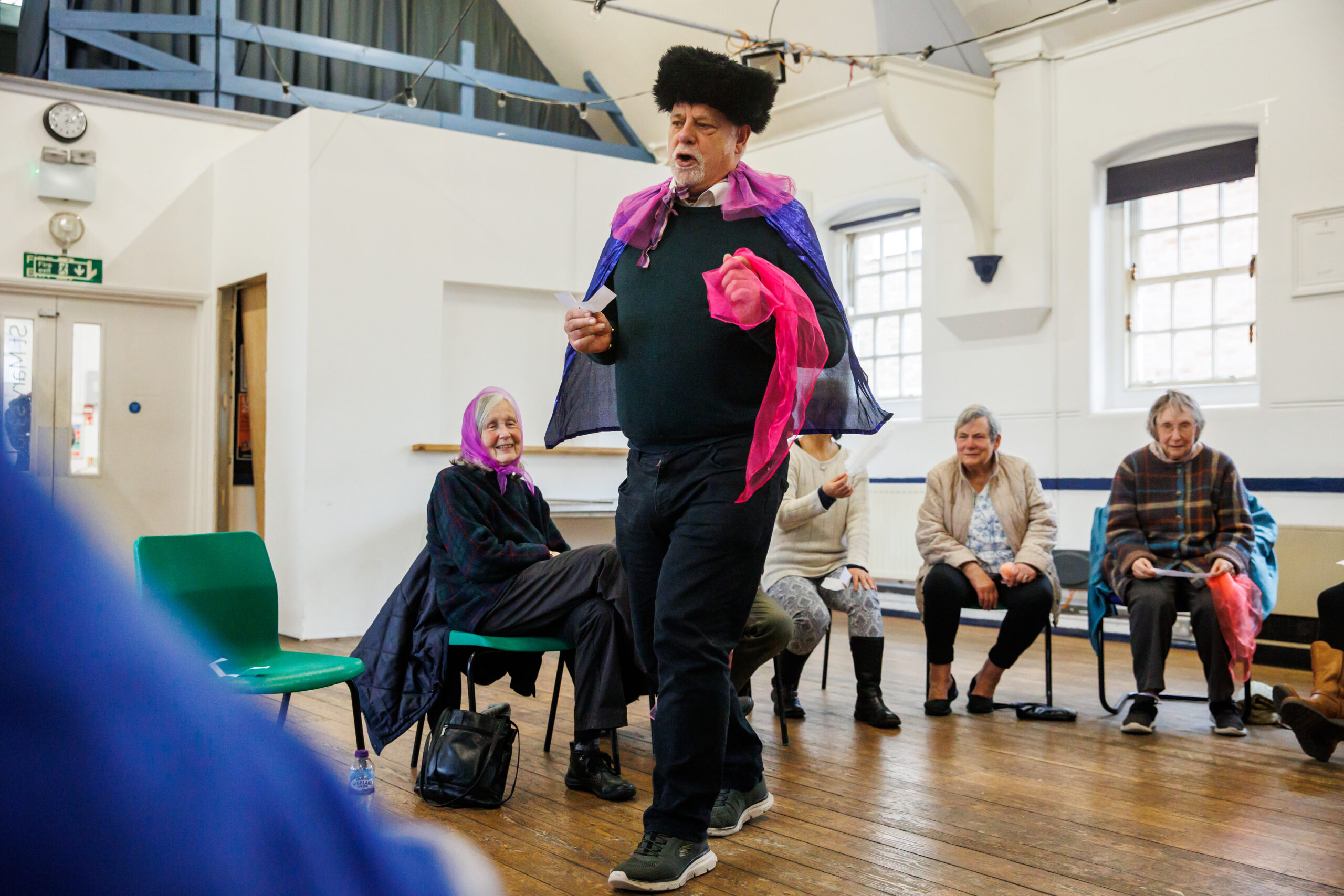 image credit: Jen Holland
In this article, we begin by elucidating our values, before going on to unpack their relationship to the impact we have on our community. It’s the first in a series reflecting on our values, methodology and impact at Bright Shadow. These articles sit alongside our expanding evaluation work and our Open Forum events, which we have been piloting since mid-2024. Out of this work emerged a need both to articulate what makes our approach different, and how we can expand our impact by sharing our principles beyond our own creative programme.
Our values
At Bright Shadow, since 2009 we’ve been sharing our belief in the fundamental importance of creating meaningful, high quality art together with people living with and affected by dementia. We make art for art’s sake in the here and now. That’s part of what makes the relationship between our artists, participants, and session coordinators so special: it is rooted in creative equality.
In this way, we focus on growth, rather than loss. Together we learn, develop, and discover new things, celebrating the artistic capabilities of people living with and affected by dementia. By working with talented creatives across various art forms, we raise expectations, cultivate trust, and foster a sense of authorship, making space for creative autonomy through collaboration with exceptional artists.
Our evaluation data consistently reflects improvements in wellbeing during, after and between our sessions. Always working to further improve the quality and depth of our evidence base, we have been studying the relationship between our values and our impact. By understanding this relationship, we can better communicate what makes our approach special. This challenge in distilling the unspoken qualities of our creative programme is encapsulated in this reflection from Brian, a member of our Medway Zest group:
“No one else is doing what Bright Shadow does. And I don’t get what’s different about it, but it’s what’s missing! I go to other groups but they’re not like this. I can’t explain it, but this is so different.”
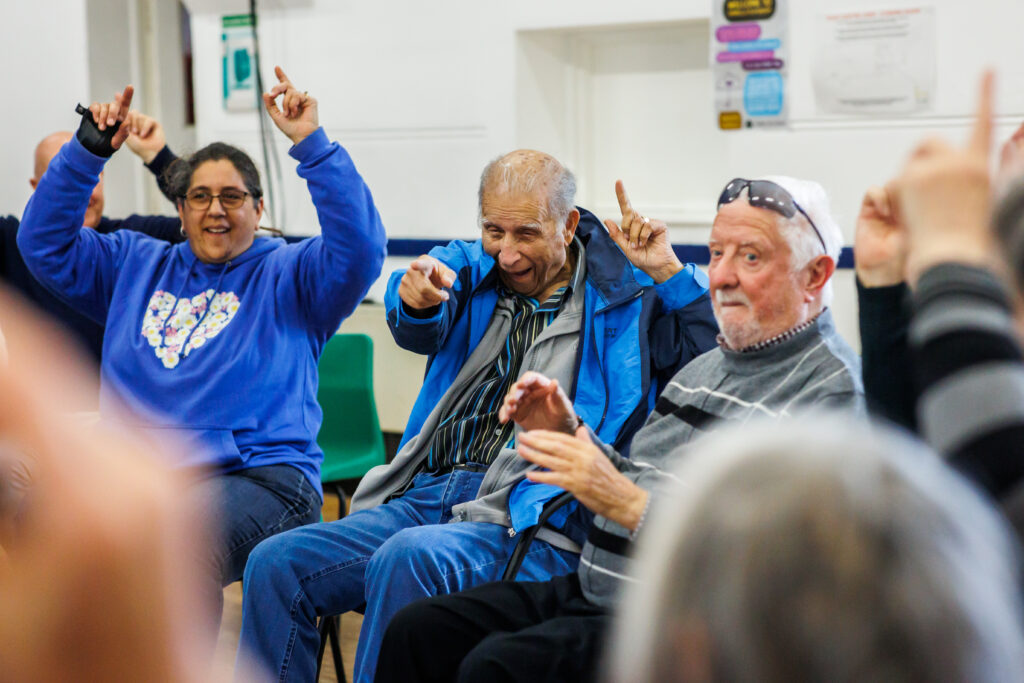
Following Brian’s lead, in the next section we investigate in more detail what makes our approach different, bringing together our own evaluation evidence with published research on the key components of successful creative interventions in dementia.
Our approach: doing dementia differently
We know that our approach is highly successful in:
- Raising expectations and stretching boundaries. In analysing qualitative data from our most recent survey, our independent evaluator found that through our creative programme, our participants raise expectations of their abilities, stretching self- and societally imposed boundaries.
- Bringing together people with different experiences and degrees of dementia and memory problems: you can remain part of our creative programme for as long as you like, which can be unusual not only in arts-led approaches like ours but in offerings for people living with dementia more broadly.
- Reducing loneliness. In our 2024 survey, all our participants and supporters said that our trademark Zest groups, which meet regularly in locations across Kent and Medway, are good at ensuring people with dementia don’t feel lonely.
- Improving wellbeing during, after and between sessions. From 6 years of wellbeing data, collected throughout the year, we can see that before a Zest session, 24% of respondents give a negative or neutral answer to how they are feeling. After the session, this falls to 3%, with 61% giving the most positive response. Furthermore, in our most recent survey, 75% of participants and supporters surveyed said that Zest sessions give them a boost that lasts throughout the week.
- Reaching members of the community who can be harder to reach, including people from global majority backgrounds. Our independent evaluator reflects that our evidence “suggests Zest is more successful in reaching diverse people than would be expected given the ethnicity of the local population.”
We’re confident that our impressive evaluation data stems from engaging the unique skills of the very best creative practitioners from fields as varied as drumming, poetry and circus arts. Emerging research on successful dementia arts programmes is beginning to bear this out, and we explore this in more detail in the following section.
Raising expectations: making meaning beyond the therapeutic
As Zelig and colleagues describe, there is “a tendency to assume that people with dementia are submissive recipients of the arts.”1 We know from our own work, and the work of researchers studying this emerging field, how important it is to foster autonomy and agency through the creative process, creating a sense of agency by trusting in everybody’s ability to make something new, meaningful and beautiful: something that matters.2
Think Local Act Personal report that “the possibility of growth and personal development after a diagnosis of dementia” is vitally important to living well: a possibility that is too often limited by societal expectations.3 The need for opportunities to “feel helpful”, as one contributor describes, alongside feeling ‘recognised and valued’ for contributing, have also emerged from our work. We will include these facets of wellbeing here under the umbrella term, meaning-making.4 We witness the importance of meaning-making throughout our creative programme, and it emerged again as a central theme from our Open Forum events, in which we use adapted Open Space Technology to centre the voices of people with dementia in developing both our creative and advocacy work. Indeed, the importance of meaning-making has repeatedly emerged through these events, highlighting its value for both people with dementia and those who give care. Our emphasis on growth, creating space to surprise ourselves, and cherishing everybody’s contributions in the here and now is key to creating opportunities for meaning-making.
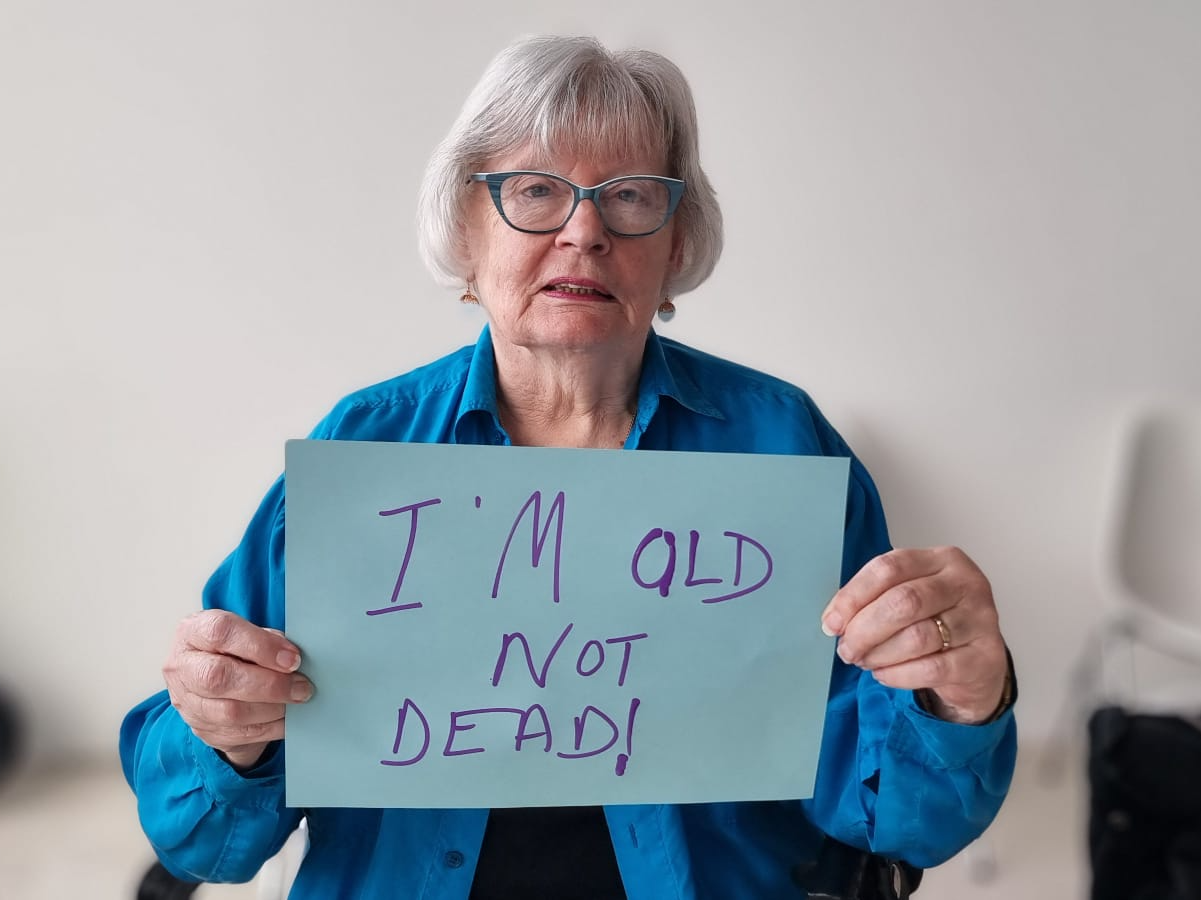
“Zest has been lifesaving for us.”
– Bright Shadow participant
In fact, engaging in “high quality mentally stimulating and enriching hands-on […] arts activities” has been found to have long lasting, multifaceted effects for people with dementia and those who give care, with each element important to creating successful interventions.5 In one randomised control trial, those who took part in “increasingly novel, challenging, and complex” multidisciplinary artistic activities experienced significantly improved self-esteem, quality of life and ability to carry out activities of daily living, while caregiving felt more manageable.6 These effects were seen even months after the conclusion of the trial.
While the control group engaged with a single discipline, painting, each week over a two-month period, with the level of complexity remaining the same, the experimental group took part in multidisciplinary activities with an increasing degree of challenge explicitly built into the programme.7 The researchers found that the experimental group’s engagement with their programme’s multidisciplinary and increasingly complex approach led to significantly better outcomes in self-esteem for participants with dementia, as well as improved caregiver wellbeing, than the control group. Improvement was also seen in quality of life.
This research, a rare example of a gold-standard randomised control trial in this field, endorses our long-standing approach and demonstrates the importance of connecting our community with exceptional artists who raise expectations by inviting us to challenge and surprise ourselves. Richards and colleagues suggest their striking results stem not only from participants seeing the fruits of their creative achievements in their own home, or from applying the problem-solving processes of art-making to other aspects of life, but also from the “spirit of independence,” pride and mental engagement that comes from creating work of value.8
“What we’ve done in today’s session has really lifted the soul.”
– Bright Shadow participant
West et al. further show that professional artists possess a unique combination of technical expertise and a “higher level of comfort with experimentation, uncertainty and risk-taking,”9 inviting people living with and affected by dementia to engage in creative risk. This is significant because:
For people living with dementia, opportunities to take risks of any kind may be much reduced as a result of the perceptions and concern of others who judge that any kind of risk (including emotional risk) must be avoided at all costs.10
In this way, collaborating with those who have expertise both in arts and dementia is fundamental to creating a rich environment for creative autonomy, ownership and agency. At Bright Shadow, we find leading artists in their field and equip them with our methodology for co-creating with people with dementia. We tap into the unique ability of professional artists to create a sense of trust, with space to challenge ourselves, imbuing each moment with the “perspective of seeing the potential of what could be achieved as opposed to what [has] been lost.”11
Moreover, because our creative programme exists beyond a therapeutic framework, there is space for the relationships between our participants, artists and session coordinators to flourish. By working with some of the best artists across disciplines, not only is every individual who engages with our creative programmes respected and taken seriously, but also we all have the opportunity to surprise ourselves by making something extraordinary.
Artists working with Bright Shadow also report experiencing personal growth and the deep value these new opportunities for collaboration hold. This creates a culture of professional curiosity and endeavour which authentically reinforces the highly meaningful nature of engaging in Bright Shadow activities, where every contribution – and each member of our community – is truly valued.
Conclusion and next steps: developing our creative framework for cultural change
“Having memory problems, Zest has helped me maintain some of my independence and confidence. I love all the activities that we do and being introduced to new things. It has encouraged me to do things for myself.” – Whitstable Zest participant
Our participant’s words capture the heart of our mission at Bright Shadow. By establishing a trusted space for people living with and affected by dementia to collaborate with talented creatives across art forms, together we create spaces where every encounter has the potential to be both creatively ambitious and profoundly human. Through these spaces, we nurture autonomy, develop flourishing connections, and challenge expectations – both internal and external.
Our instincts about the mechanisms for the success of our creative programme – shaped by our work as a small but mighty team embedded within it – are consistently reflected in our expanding evaluation data, as well as broader research on the role of the arts in living well with dementia. These in turn feed back into the development of our creative programme. One aspect ripe for further exploration in this area is the ability of creative programmes like ours to change public perceptions and attitudes around dementia.
This need to explore how the impact of creative programmes for people living with and affected by dementia can change public perceptions and attitudes formed part of the impetus for our Open Forum events. Through these events, we use adapted Open Space Technology to centre the voices of people living with and affected by dementia in driving both our creative work and our advocacy. Alongside this work, we’ve developed our inclusive board, welcoming two trustees living with dementia to share the responsibility for our organisation.
From our Open Forums emerged the idea of a creative framework for cultural change, giving full expression to the range of demands, hopes and dreams that people have for their own lives, which are not all deliverable through our activities but which we could influence through our creative approach. Through this ongoing process, we aim to create a methodology for dementia positivity and inclusion through which we can broaden our impact on the wider community.
This is the first in a series of reflective articles we have written with the intention of opening up our learning and practice. In the next article, we explore our learning from this process in more detail, before sharing the development of our evolving framework. We invite readers to reflect on the ways in which playing a full role in cultural life – as participants, producers, artists, researchers, care workers – can have a profound impact on wider societal attitudes towards living with dementia, the care of people with dementia and the strength of our communities.
This article is part of Bright Shadow’s Living Dementia Differently series, exploring creativity, wellbeing and cultural change. Read the full series and discover our latest project, Bright Times, here.
Download a summary of our latest insights:
- Zeilig, Hannah et al. “Co-creativity, well-being and agency: A case study analysis of a co-creative arts group for people with dementia.” Journal of aging studies vol. 49 (2019): 16. doi:10.1016/j.jaging.2019.03.002 ↩︎
- Windle, Gill et al. “Exploring the theoretical foundations of visual art programmes for people living with dementia.” Dementia (London, England) vol. 17,6 (2018): 702-727. doi:10.1177/1471301217726613 ↩︎
- Think Local Act Personal (TLAP), ‘I just want to be able to dance’: Promoting the Wellbeing of People Living with Dementia through Community Development, Social Innovation, and Personalised Support (London: TLAP, July 2025), p. 14. ↩︎
- Ibid., p. 15. ↩︎
- Richards, Allan G et al. “Visual Arts Education improves self-esteem for persons with dementia and reduces caregiver burden: A randomized controlled trial.” Dementia (London, England) vol. 18,7-8 (2019): 3132. doi:10.1177/1471301218769071 ↩︎
- Ibid., p. 3130 ↩︎
- Ibid., pp. 3130-3142 ↩︎
- Ibid., p. 7 ↩︎
- West, Julian et al. p.10 “Making a living moment more resonant: an exploration of the role of the artist in co-creative work with people living with dementia.” Wellcome open research vol. 8 580. 24 Jul. 2024, doi:10.12688/wellcomeopenres.19357.1 ↩︎
- Ibid. ↩︎
- Windle G, Gregory S, Howson-Griffiths T, Newman A, O’Brien D, Goulding A. Exploring the theoretical foundations of visual art programmes for people living with dementia. Dementia. 2017;17(6):713. doi:10.1177/1471301217726613 ↩︎