The Theoretical Basis of Zest
The Zest approach to activities for people with dementia is at the forefront of the dementia-positive movement.
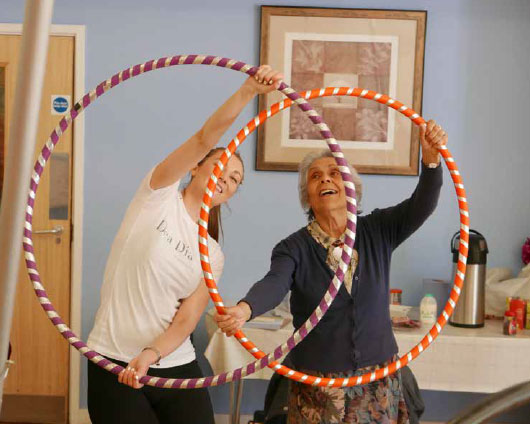 image credit: Jen Holland
The Zest approach to activities for people with dementia is at the forefront of the dementia-positive movement. The sessions focus on what people with dementia can do, rather than what they cannot, aiming to demonstrate that participants living with dementia can engage in creative activities and learn new creative skills (Bier et al, 2008).
The social model of disability
A national discourse on applying the social model of disability to understanding and responding to dementia has been steadily currently growing (Manthorpe and Illife, 2016). Taking this approach places the priority not on treatment or concentrating on finding the cure without sufficient regard for people who are currently living with dementia, but on investing in relational skills for professionals working with dementia and helping family carers through the complexities of caring.
Crucially, this approach also strongly advocates reducing the stigma of dementia and normalising dementia through dementia-friendly communities. Zest is an example of this approach in action. As already stated, Zest sessions do not label participants based on the presence or absence of dementia, but invite both carers and people with dementia to participate as equals, and focus on what participants can do. Furthermore, Zest adopts an affirmative Disability Arts Model (Swain and French, 2000), giving a proud voice to dementia culture, as well as celebrating the stories, experiences and unique insights of people with dementia. Zest sessions also provide a space for people with dementia to produce creative outputs and develop new artistic skills.
Zest and a sense of community
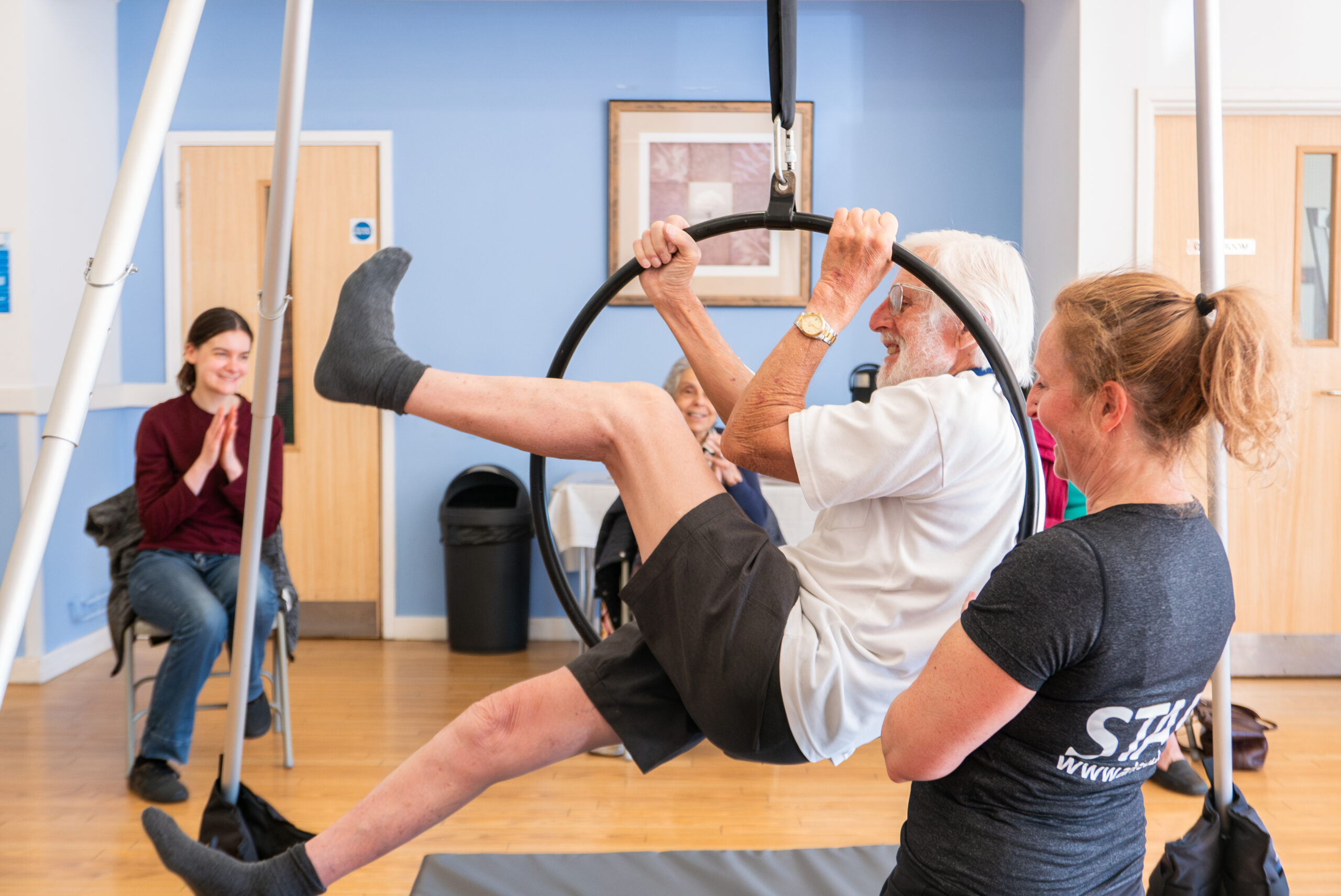
Whilst designed with the needs of people with dementia in mind, the Zest approach does not differentiate between people with and without dementia. Instead, participants are treated in an individual and person-centred manner; something that past research has shown to be crucial in successful arts-based programmes for people with dementia (Sauer et al, 2016).
Zest also provides social opportunities for participants with dementia further facilitated by the creative process; this includes both developing existing relationships with family carers, and building new friendships with other people whose experiences may be similar. The Zest model aims to support participant personhood – a sense of self-identity maintained by relationships (Kitwood, 1997; McCormack et al, 2012). While the approach is not overtly built on the ‘Senses Framework’ for enhancing personhood in dementia (Nolan et al, 2001, 2002), the sessions aim to boost participants’ sense of belonging (to the group), sense of continuity (by providing a programme that lasts over a year), sense of achievement and of significance.
The multi-sensory nature of Zest sessions also draws on emerging evidence on the importance of embodiment in working with people with dementia (Kontos et al, 2017), which moves away from the dominant focus on cognitive deficit and sees the body as a source opportunity to build relationships with and between people with dementia (Martin et al, 2013). Multi-sensory activities do not focus solely on the cognitive skills, but provide chances for physical and tactile expressions of self.
The sessions also do not aim to improve cognitive skill through potentially difficult exercises (as has often been the case for community-based groups for people with dementia; Young et al, 2016). Participant enjoyment and wellbeing are instead the principal intended outcome of the sessions (Nyman and Szymczynska, 2016). Zest focuses on the ‘Here and Now’ (McPherson et al, 2009), participant enjoyment in the moment is central, even if participants do not remember the sessions soon after. As memories are formed by neural pathways (which are compromised by dementia), and emotions are a change in brain chemicals, emotions last after memory fades (Guzman-Velez et al, 2014).
Zest also works with family carers, who are invited to take part in Zest sessions in the same way as participants with dementia. Carers are not excluded from the sessions or invited as observers only. This goes in line with dementia care literature that emphasises the ‘we-ness dimension’ between people with dementia and their carers (Hyden & Nilsson, 2013), and suggests that the couple or dyad should be approached as the ‘starting point’ in dementia-related initiatives, rather than engaging with ‘the person with dementia’ and ‘the carer’ separately (Perry & O’Connor, 2002).
As well as providing joint creative opportunities for people with dementia and their carers, the Zest approach also acknowledges that loneliness can be experienced even if the person with dementia has a family carer. Research has demonstrated that both the social connections and physical space shrinks with the advancement of dementia, and that – crucially – this affects both the person with dementia and their carer (especially spousal carers; e.g. Brayne et al, 2006, van Steenwinkel et al, 2014). Zest Communities offers the much needed social connectedness, which extends beyond meeting other families/dyads living with dementia, but also focuses on the quality of the relationship within dyads.
Lastly, enabling people with dementia and their carers to be an active part of a creative community (not only receiving the ‘intervention’, but also making suggestions and producing creative pieces that such as films, choreography or poems) enhances participant citizenship. During Zest sessions, people with dementia are viewed as valued members of society, able to contribute their creativity and produce artistic outputs (Bartlett and O’Connor, 2006).
Dr Rasa Mikelyte, March 2019